
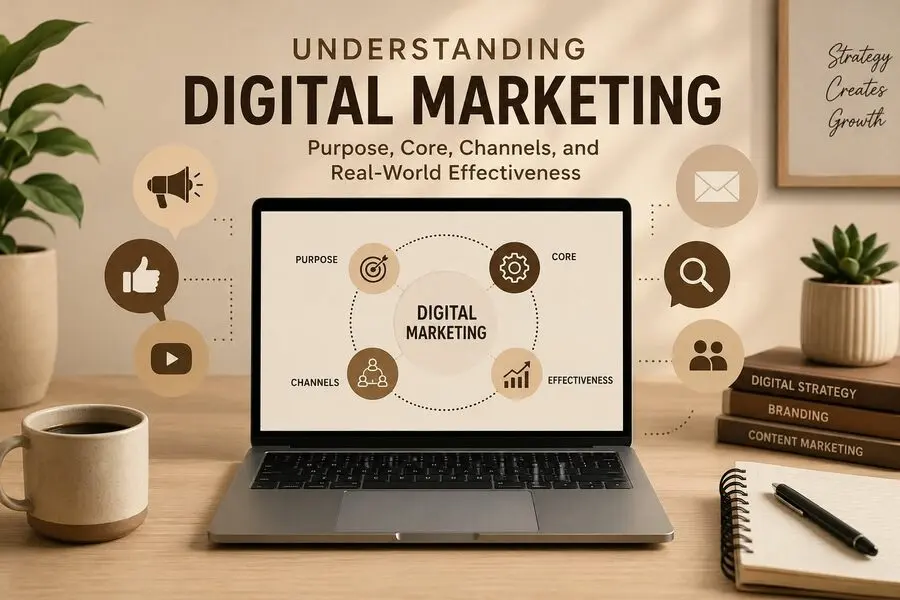
Understanding Digital Marketing is essential for businesses in today’s online marketplace. It explains how businesses connect with their target audience, build brand awareness, and achieve their marketing goals through digital channels. Digital marketing is no longer just a luxury reserved for tech startups or large corporations. It is a critical requirement for businesses of all sizes.
Below is an overview of why digital marketing exists, how it works across key channels, and why it outperforms traditional channels when it comes to measuring impact.
1. What Is the Primary Purpose of Digital Marketing?
At its core, digital marketing uses online channels—such as search engines, social media, email, and websites—to connect businesses with current and potential customers. While the ultimate goal is driving revenue, digital marketing fulfills several critical business purposes:
Building Brand Awareness: Establishing an online presence ensures potential buyers find your brand first during their research process.
NareshITReaching the Right Audience: Unlike broad-brush traditional tactics, digital tools let you target consumers based on specific demographics, online behavior, location, and purchase intent.
Honeycomb Creative SupportDriving Customer Engagement: Digital marketing creates a two-way dialogue, enabling brands to interact with their community through content, responses, and real-time support.
EICTA Consortium – IIT KanpurGenerating High-Quality Leads: By providing relevant content to people seeking specific solutions, digital channels pull interested buyers directly into your sales funnel.
2. Core Digital Marketing Pillars
To build an effective digital strategy, brands rely on a combination of foundational channels:
Search Engine Optimization (SEO): Optimizing web pages to rank higher on search engines organically, attracting high-intent visitors without paying directly for ad clicks.
Pay-Per-Click (PPC) Advertising: Running targeted ads on platforms like Google Ads or Meta Ads, allowing brands to capture immediate visibility and leads for specific search queries or user profiles.
Honeycomb Creative SupportSocial Media Marketing: Leveraging platforms like Instagram, LinkedIn, and TikTok to build community, share visual content, and engage directly with consumers.
Content Marketing: Creating valuable blog posts, guides, and videos that answer customer questions, building industry authority and long-term search value.
Henry HarvinEmail Marketing: Nurturing relationships over time through tailored newsletters, abandoned cart reminders, and promotional updates.
3. How Digital Marketing Compares to Traditional Marketing
Understanding Digital Marketing helps businesses recognize the advantages of online marketing over traditional methods.
| Feature | Traditional Marketing (Print, TV, Radio, Billboards) | Digital Marketing (SEO, Social, PPC, Email) |
|---|---|---|
| Geographic Reach | Primarily local or regional. | Global scale instantly. |
| Audience Targeting | Broad demographic estimates. | Hyper-precise data based on behavior, search intent, and interest. |
| Upfront Cost | High fixed costs (print runs, airtime fees). | Scalable and budget-friendly, entry points start small. |
| Measurability | Estimated impressions; hard to attribute sales directly. | Exact data per action (clicks, conversions, customer journeys). |
| Agility | Difficult to modify once published. | Real-time campaign tweaks, A/B testing, and budget reallocations. |
4. Why Digital Marketing Is So Effective
The success of digital marketing boils down to three key levers:
Precise Audience Targeting
Instead of paying to display a billboard to thousands of daily commuters—only a fraction of whom might need your service—digital campaigns allow you to target users actively searching for your products or matching your ideal buyer persona.
Real-Time Tracking & ROI Optimization
Every link click, video view, form submission, and online purchase is trackable. Marketers can view exact performance metrics in dashboards (like Google Analytics) to identify which channels yield the best Return on Investment (ROI) and optimize underperforming campaigns in real time.
Cost Efficiency & Scalability
Digital channels allow startups and small businesses to compete alongside global enterprise brands. Because daily ad budgets can be capped and adjusted at any time, brands can start with small spending limits, prove profitability, and scale ad spend systematically.
Digital marketing transforms promotional budgets into trackable assets. By combining targeted search, active social channels, and clear analytics, businesses build stronger customer relationships and drive scalable, measurable growth.