
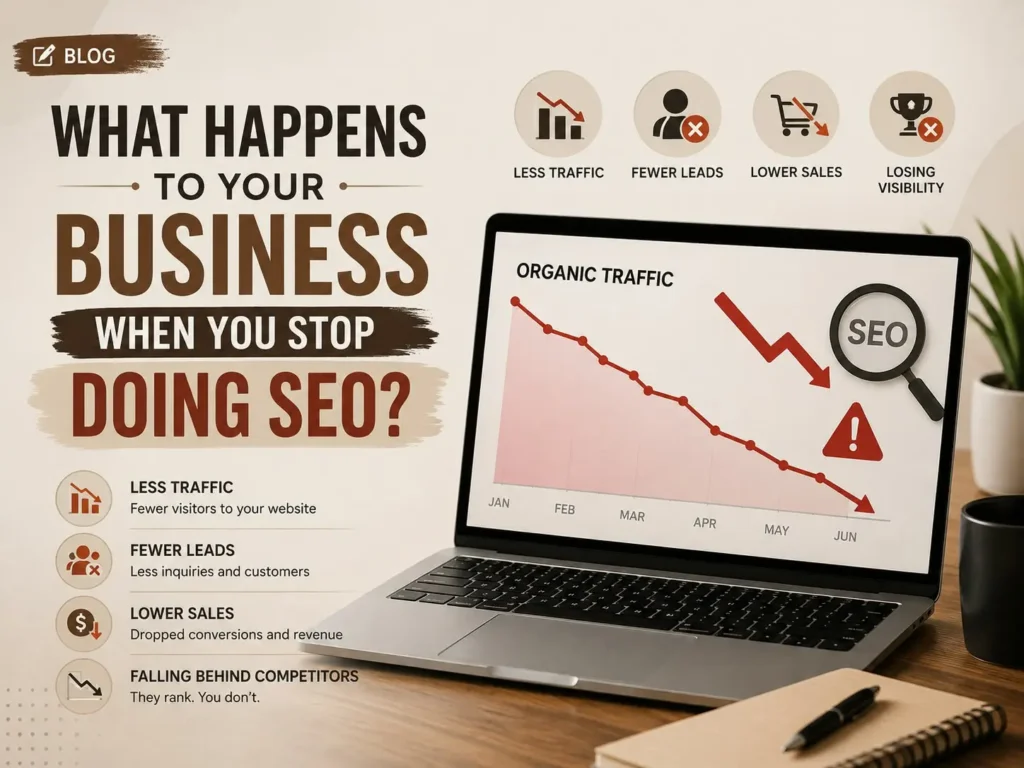
Search Engine Optimization (SEO) is often seen as a milestone project—something you work on, complete, and check off your list. However, SEO is not a static achievement; it is an ongoing process. Thinking of SEO as a one-time task is like going to the gym for six months, reaching your target fitness level, and expecting to stay in shape forever without ever working out again.What happens when you stop doing SEO? In short, Your website may gradually lose its search engine visibility, organic traffic, and potential customers. SEO plays an important role in maintaining your website’s online presence and long term growth.
So, what actually happens when you press pause or completely stop your SEO efforts? While your website won’t disappear overnight, the decline is inevitable. Here is a breakdown of what happens to your business when you stop doing SEO.
1. What Happens to Organic Traffic When You Stop Doing SEO?
When you stop creating content, optimizing technical elements, and earning backlinks, your site isn’t frozen in time—your competitors keep moving forward.
Google’s algorithms prioritize fresh, authoritative, and relevant content. As your existing pages grow outdated, search engine crawlers will visit your site less frequently, leading to a gradual drop in rankings. As your rankings slip from position 1 to position 5—and eventually off page one—your organic traffic will follow.
To understand how digital marketing helps businesses grow online, explore our guide on Understand Digital Marketing.
2. How Competitors Benefit When You Stop Doing SEO
SEO is inherently competitive. If you stop optimizing, your business surrenders ground to competitors who continue to invest in their organic visibility.
When a competitor notices you’ve stopped publishing new content or updating older posts, they can target your top-performing keywords, create fresher resources, and win away your top search positions along with the high-intent customers searching for them.
3. How Does Stopping SEO Affect Your Website Content?
Search engines favour content that offers accurate, up to date information. Over time, statistical data, industry guidelines, software references, and links on your site become obsolete or broken.
Outdated information leads to a poor user experience. Visitors bounce quickly when they land on old pages, signal to Google that your site is no longer providing value further accelerating your rank drop.
As digital marketing continues to evolve, leran more about how AI is changing the role of digital marketers.
4. Technical Issues Silently Accumulate
SEO isn’t just about keywords and blog posts; technical health is vital to your site’s performance. Without ongoing technical monitoring:
Site speed can slow down as plugins age or server environments change.
Broken links (404 errors) emerge as external sites shift or internal pages are removed.
Security vulnerabilities can develop, risking penalties or warning labels on search results.
Mobile usability issues might arise as modern web standards evolve.
Left unchecked, these small technical glitches stack up and negatively impact user experience and search performance.
5. Paid Ad Costs Will Increase to Fill the Gap
When organic leads start drying up, businesses often turn to Paid Ads (PPC) like Google Ads or Meta Ads to maintain lead flow.
While PPC offers immediate traffic, it comes at a price. As soon as you stop paying for ads, the traffic stops instantly. Relying purely on paid acquisition without a steady organic baseline significantly increases your overall Customer Acquisition Cost (CAC) over time.
6. Your Brand Authority and Trust Take a Hit
High organic search rankings carry an implicit stamp of approval from search engines. When users consistently see your brand appearing at the top of search results for industry questions, it builds trust and credibility.
Sliding down the search rankings reduces your brand’s digital presence and authority, making it harder for potential customers to trust your business over more visible competitors.
The Verdict: SEO is an Ongoing Strategy, Not an Event
Stopping SEO doesn’t trigger an instant collapse, but it starts a steady, compounding decline in traffic, leads, and revenue. Maintaining your organic search foundation requires far less effort and budget than trying to rebuild a site’s search presence from scratch after months of neglect.You can also learn more about SEO best practices through Google’s official SEO Starter Guide.
Treat SEO as a core operational channel keep refreshing your top content, monitoring technical health, and adapting to search trends to protect and grow your digital market share.